Space Force & The Star Trek Future: NATO, SSPs, and 2060 Vision

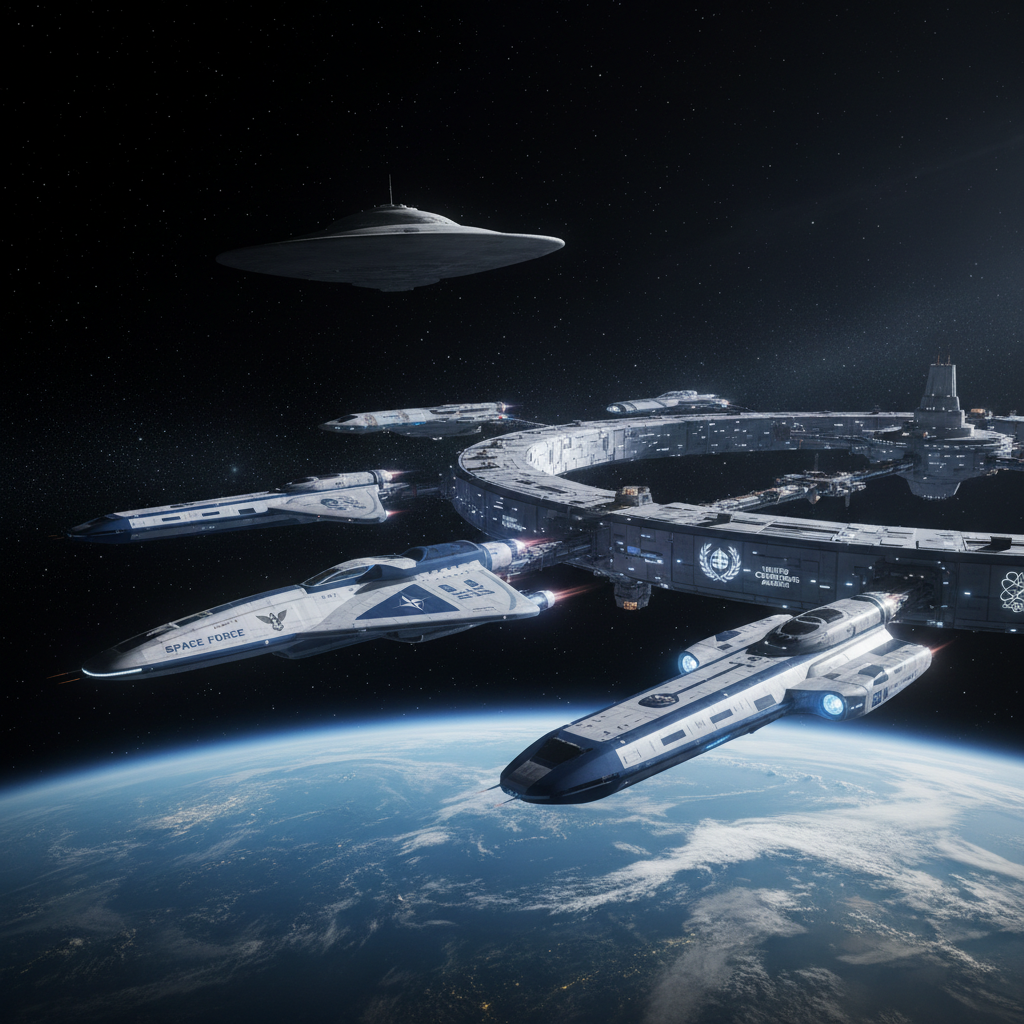
The Blueprint for a Galactic Civilization
On September 5, 2019, a pivotal moment in human history occurred in a room filled with strategists, scientists, and military leaders. The Space Futures Conference, hosted by the US Air Force Space Command, wasn’t just another bureaucratic gathering; it was a mission to map out the next forty years of human evolution in the cosmos. The goal was to analyze evolving conditions in space up to the year 2060. Out of this summit, eight possible futures emerged, ranging from dystopian conflicts to a utopian vision dubbed the “Star Trek Future.”
This optimal scenario involves a multinational alliance where nations collaborate seamlessly in civil, military, and commercial affairs. It envisions a world where the boundaries of Earth fade in the rearview mirror of a unified human effort. To understand how we get there, one must look at the literature and history of our cosmic aspirations, much like the insights found in Space Force: Our Star Trek Future. Today, we stand at a crossroads where the emergence of the U.S. Space Force, the signing of the Artemis Accords, and the creation of NATO’s Space Center serve as the fulcrum for ushering in this visionary era.
The Pillars of the Multinational Alliance
The transition from science fiction to geopolitical reality is currently being paved by three major developments:
- The U.S. Space Force: Established to protect U.S. and allied interests in space, it provides the organizational backbone for long-term orbital security.
- The Artemis Accords: A set of principles designed to guide sustainable space exploration, already signed by dozens of nations, fostering a transparent environment for lunar and planetary missions.
- NATO Space Center: By declaring space as an operational domain, NATO has signaled that the defense of democracy now extends beyond the atmosphere.
The Shadow of a ‘Space Pearl Harbor’
Despite the optimism surrounding a unified front, the path to the “Star Trek Future” is fraught with peril. The existence of uncooperative rival space programs, specifically those of China and Russia, creates a volatile “Cold War” dynamic in orbit. Over twenty years ago, a blue-ribbon Space Commission chaired by Donald Rumsfeld issued a chilling warning: the United States is vulnerable to a “Space Pearl Harbor.”
A surprise attack on our satellite infrastructure could devastate the Global Positioning System (GPS), crippling not just the military, but the global economy, power grids, and emergency services. This threat isn’t just theoretical; it drives the urgent defensive mandates of the modern Space Force. As discussed in Space Force: Our Star Trek Future, the ability to deter such an attack is the prerequisite for any peaceful collaboration.
Rivalries in the Great Void
While the Artemis Accords seek transparency, the Sino-Russian partnership is building a parallel architecture, including a planned International Lunar Research Station (ILRS). This bifurcation of space governance risks creating a “fragmented future” where competing blocs vie for resource-rich areas of the Moon and Mars, potentially leading to kinetic conflict far from Earth’s shores.
The Wildcard: Secret Space Programs and Antigravity Technology
Behind the public-facing NASA missions and Space Force launches lies a darker, more complex layer of the cosmic puzzle: Secret Space Programs (SSPs). For decades, whistleblowers and researchers have pointed to the existence of reverse-engineered craft utilizing antigravity propulsion. These programs, which allegedly operate outside congressional oversight, pose a significant challenge to the “Star Trek Future.”
If these programs possess technology that makes chemical rockets look like horse-drawn carriages, the public Space Force faces an identity crisis. Will Space Force be able to integrate these US-based secret programs? Or will these “breakaway civilizations” remain obstacles to official diplomatic efforts? The book Space Force: Our Star Trek Future explores the friction between acknowledged military branches and these “black budget” entities.
The Role of the U.S. Navy and the ‘Nordic’ Connection
Intriguingly, rumors within the intelligence community suggest that the U.S. Navy has long maintained its own secret space battle groups. Some accounts suggest these fleets were developed with the assistance of friendly, human-looking ‘Nordic’ extraterrestrials. The ultimate challenge for a unified Starfleet will be the conditions under which the Navy surrenders authority over these advanced assets to a multinational body like NATO or a global Space Force.
Extraterrestrial Life: The Ultimate Governance Challenge
No discussion of a “Starfleet” is complete without addressing the entities already residing in the stars. The existence of extraterrestrial life is the ultimate wildcard. As Space Force and its allies project humanity’s presence into the solar system, they will inevitably encounter non-human intelligence. How will these visitors respond?
Benign or Belligerent?
The response of extraterrestrial civilizations likely depends on our own unity. A fractured humanity, bringing its terrestrial wars into space, may be viewed as a threat to be contained. Conversely, a unified multinational coalition—a true proto-Starfleet—might be welcomed into a broader galactic community. The dynamics of these theoretical first contacts are a core theme in Space Force: Our Star Trek Future.
- The “Zoo” Hypothesis: Aliens may be waiting for us to reach a certain level of social and technological maturity before making open contact.
- Tactical Deterrence: Space Force may serve as a “border guard,” ensuring that humanity’s entry into the galactic stage is seen as a move of strength rather than desperation.
Constructing the Real-Life Starfleet
To achieve the optimal 2060 vision, the transition from individual national space forces to a unified “Starfleet” must occur. This involves more than just shared technology; it requires a radical shift in human consciousness and governance. NATO and the U.S. Space Force are the foundation, but the structure must eventually include all of humanity.
Dealing with Rogue Elements
A future Starfleet will not only face external alien threats or rival nations but also rogue secret space programs. These “off-world” groups may have their own agendas, independent of any Earthly government. Successfully integrating or neutralizing these groups is essential for ensuring that the “Star Trek Future” isn’t hijacked by private or unaccountable interests. This complex web of intrigue is meticulously detailed in Space Force: Our Star Trek Future.
Actionable Steps Toward a Space-Faring Civilization
- Standardization: Creating universal docking and communication protocols (already beginning with the Artemis Accords).
- Transparency: Declassifying antigravity and advanced energy technologies to level the playing field between the public and secret sectors.
- Diplomacy: Establishing a clear “Code of Conduct” for encounters with non-human intelligences.
Conclusion: The Choice Before Us
The year 2060 is closer than it seems. The decisions made by today’s military leaders, politicians, and aerospace innovators will determine if we live in a world of cosmic cooperation or a nightmare of orbital debris and perpetual war. By embracing the principles of the “Star Trek Future,” we can move past the vulnerabilities of a “Space Pearl Harbor” and step into a larger reality. Whether you are a skeptic or a believer in the secret history of space, the momentum toward the stars is undeniable. To stay ahead of these developments, staying informed through resources like Space Force: Our Star Trek Future is essential for anyone looking to understand the destiny of our species.
Discover more from Unread Page
Subscribe to get the latest posts sent to your email.