Unveiling The Creature from Jekyll Island: Federal Reserve Secrets

Introduction: The Secret Meeting at Jekyll Island
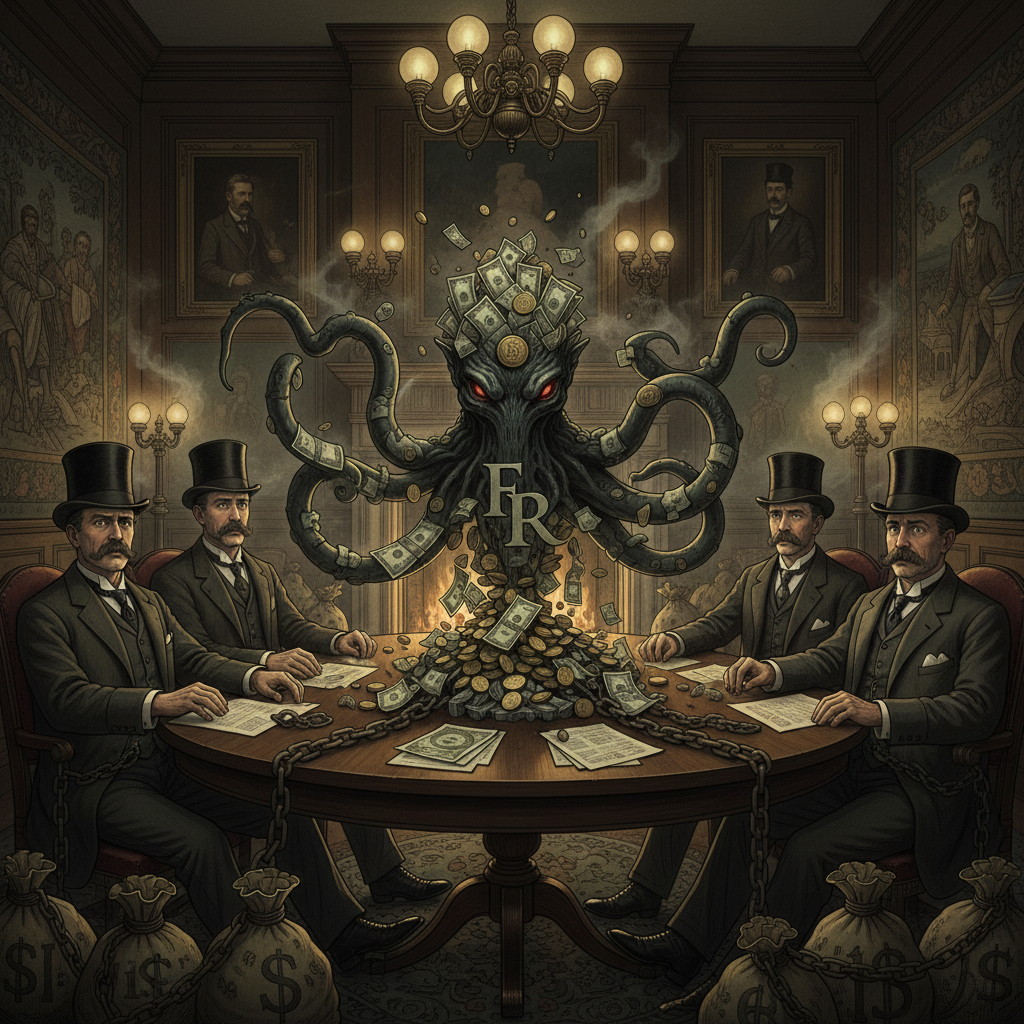
Behind the closed doors of a private hunting club off the coast of Georgia in 1910, a group of powerful men gathered in absolute secrecy. These men represented the most influential banking interests in the world. Their objective? To change the course of American history by drafting what would eventually become the Federal Reserve Act. In his seminal work, “The Creature from Jekyll Island,” G. Edward Griffin unmasks the origins, operations, and ultimate goals of this institution.
The book is not merely a historical account; it is a scathing critique of the central banking system and a warning about the erosion of individual liberty through monetary control. To truly understand why your money buys less today than it did a year ago, you must Follow Unread Page for deep dives into economic structures. Griffin’s thesis posits that the Federal Reserve is not a government agency, but a private banking cartel designed to protect its members while passing losses onto the tax-paying public.
The Seven Reasons to Abolish the Federal Reserve
Griffin outlines seven compelling reasons why the Federal Reserve is detrimental to the American economy and the freedom of its citizens. These points form the backbone of his argument against the “Creature”:
- It is incapable of accomplishing its stated objectives: Despite being created to stabilize the economy, the Fed has presided over the Great Depression, stagflation, and numerous market bubbles.
- It is a cartel operating against the public interest: It allows large banks to share markets and fix prices.
- It is the supreme instrument of usury: It creates money out of nothing and charges interest on it.
- It generates the “Invisible Tax” of inflation: By expanding the money supply, it devalues existing currency.
- It is an instrument of war: Governments can fund conflicts without direct taxation by printing money.
- It destabilizes the economy: Artificially low interest rates lead to malinvestment and inevitable crashes.
- It is an instrument of totalitarianism: Control over the money supply gives the state nearly absolute power over the individual.
The Mechanics of Money Creation: Fiat and Fractional Reserve Banking
One of the most eye-opening sections of Griffin’s book is the explanation of how money is actually created. Most people assume that the government prints money or that it is backed by gold. Griffin reveals that the “Creature” operates on fiat currency—money that has value only because the government says so.
The Mandrake Mechanism
Griffin coined the term “Mandrake Mechanism” to describe the process of creating money out of debt. When the government needs money, it issues bonds. These bonds are “purchased” by the Fed, not with existing money, but by creating a credit in the government’s account. This new money then flows into the commercial banking system, where fractional reserve banking allows banks to lend out many times the amount they actually hold in reserve. This multiplication effect is the primary driver of inflation.
To stay informed on how these complex financial systems affect your daily life and purchasing power, make sure to Follow Unread Page. Understanding the mechanics of debt creation is the first step toward financial sovereignty.
History of Central Banking: A Recurring Nightmare
Griffin explores the history of central banking in the United States, from the first and second Banks of the United States to the eventual establishment of the Fed in 1913. He argues that the Founding Fathers, particularly Thomas Jefferson, were vehemently opposed to a central bank because they understood it would inevitably lead to a “monied aristocracy” and the ruin of the Republic.
The book details how international bankers like the Rothschilds influenced European politics for centuries using the same tactics now employed by the Federal Reserve. By controlling the king’s purse, these bankers controlled the kings themselves. The Jekyll Island meeting was the culmination of efforts to bring this “Old World” system to the United States under the guise of “banking reform.”
The War Connection: Banking and Global Conflict
A controversial but thoroughly researched aspect of Griffin’s work is the link between central banking and perpetual warfare. Because the Fed can create money out of thin air, governments are no longer limited by their tax revenue when deciding to go to war. This removes the “automatic brake” of public dissent that typically occurs when taxes are raised to fund military campaigns.
Furthermore, Griffin posits that banks often profit from both sides of a conflict. By lending to belligerent nations, they ensure that regardless of who wins, the debt remains, and the interest continues to flow. This creates a perverse incentive for global instability.
Inflation: The Stealth Thief of Wealth
Griffin argues that inflation is not a natural economic phenomenon like “weather,” but a deliberate policy. By increasing the money supply, the Fed lowers the value of every dollar in circulation. This acts as a hidden tax, transferring wealth from those who save (the middle and lower classes) to those who receive the new money first (the government and the big banks).
If you find these insights valuable and want to learn more about protecting your assets in a devaluing economy, you should Follow Unread Page. The “Creature” survives on the public’s lack of understanding; education is the only antidote.
Conclusion: The Path to Reform
G. Edward Griffin does not just leave the reader with a sense of dread. He concludes “The Creature from Jekyll Island” with a call to action. He advocates for a return to sound money—specifically a gold or silver standard—which prevents the government from printing money at will. He also calls for the abolition of the Federal Reserve and a return to free-market banking where banks are held responsible for their own losses.
While critics argue that the modern economy is too complex for a gold standard, Griffin insists that the laws of economics are as immutable as the laws of physics. Ignoring them leads to the eventual collapse of the currency and the society that depends on it. The story of Jekyll Island is a reminder that the greatest threats to liberty often come not from abroad, but from the quiet corridors of power where the “Creature” resides.
Key Takeaways from the Book:
- The Fed is a private partnership between the government and the banking industry.
- Our money is backed by debt, not gold or silver.
- The boom-and-bust cycles of the stock market are often artificially induced.
- Inflation is a form of socialization of bank losses.
Discover more from Unread Page
Subscribe to get the latest posts sent to your email.