Dancing Wu Li Masters: Physics Meets Eastern Wisdom

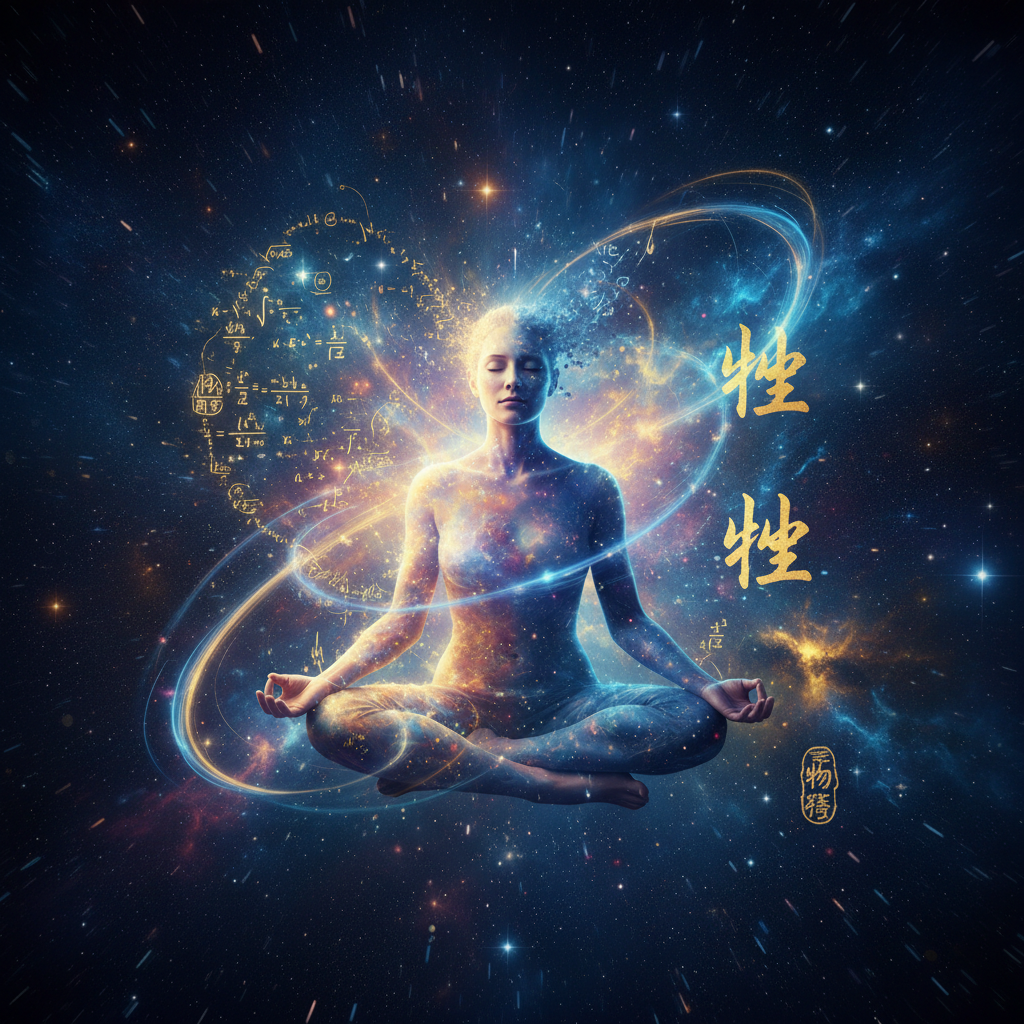
The Convergence of Ancient Wisdom and Modern Physics
In the late 20th century, a literary phenomenon changed the way the general public perceived the dense, often intimidating world of subatomic particles. That phenomenon was Gary Zukav’s masterpiece, Dancing Wu Li Masters: An Enlightening Exploration of Quantum Physics, Eastern Philosophy, and the Interplay of Science and Spirituality. For many, this book served as the first bridge between the rigid empirical world of Western science and the fluid, intuitive world of Eastern mysticism.
The core thesis of the book—and of this exploration—is that the further we delve into the heart of matter, the more the physical world begins to resemble the descriptions of reality found in Buddhist, Taoist, and Hindu traditions. Instead of a universe of “things,” we find a universe of relationships. Instead of static objects, we find a “dance” of energy. This intersection is not merely coincidental; it represents a fundamental shift in human consciousness and our understanding of our place in the cosmos.
What Does “Wu Li” Mean?
Zukav begins his journey by introducing the Chinese term for physics: Wu Li. However, as he beautifully illustrates, the Mandarin language is tonal and contextual, meaning “Wu Li” can translate to various meanings depending on the accent and intention. These include:
- Patterns of Organic Energy: The way matter expresses itself through movement.
- My Way: The personal path of discovery.
- Nonsense: The realization that the rational mind has limits.
- I See My Heart: The ultimate realization of the self through the observation of the universe.
- Universal Law: The structural principles of the cosmos.
This linguistic flexibility sets the stage for Dancing Wu Li Masters: An Enlightening Exploration of Quantum Physics, Eastern Philosophy, and the Interplay of Science and Spirituality, reminding us that science is not just a cold collection of facts, but a deeply human endeavor that reflects our internal state.
The Ghost in the Machine: Quantum Mechanics Explained
To understand why spiritual practitioners are so fascinated by physics, we must look at the transition from Newtonian physics to Quantum Mechanics. In the Newtonian “Clockwork Universe,” everything was predictable. If you knew the initial position and velocity of every atom, you could theoretically predict the entire future of the universe.
Quantum Mechanics shattered this certainty. The introduction of the Heisenberg Uncertainty Principle and Wave-Particle Duality revealed that at the subatomic level, things do not have definite properties until they are observed. This is often where science begins to sound like mysticism. The observer is no longer separate from the observed; the two are inextricably linked. By reading Dancing Wu Li Masters: An Enlightening Exploration of Quantum Physics, Eastern Philosophy, and the Interplay of Science and Spirituality, readers begin to see that the “objective” world is a myth.
The Observer Effect and Consciousness
One of the most profound implications of the “Wu Li” approach is the Observer Effect. In the famous Double-Slit Experiment, the mere act of measuring a particle changes its behavior. If a particle “knows” it is being watched, what does that say about the nature of consciousness? Researchers and philosophers alike have used this as a springboard to suggest that consciousness might be the fundamental fabric of the universe, rather than a byproduct of biological evolution.
Bridging the Gap: Science Meets Eastern Philosophy
Why does quantum physics resonate so strongly with Eastern philosophy? The parallels are striking and are explored in depth throughout Dancing Wu Li Masters: An Enlightening Exploration of Quantum Physics, Eastern Philosophy, and the Interplay of Science and Spirituality. Here are the primary points of convergence:
1. Interconnectedness (Sunyata)
In Buddhism, the concept of Sunyata (emptiness) suggests that nothing exists independently. Everything is “empty” of a separate self because everything is dependent on everything else. Contrast this with Quantum Entanglement, where two particles become linked so that the state of one instantaneously influences the state of the other, regardless of the distance between them. Einstein called this “spooky action at a distance,” but a Zen master might simply call it “the way things are.”
2. The Illusion of Maya
In Hindu philosophy, Maya refers to the illusory nature of the physical world. We see solid objects, but in reality, atoms are 99.999% empty space. What we perceive as “solid” is actually the vibration of energy fields. Modern physics confirms this: what we think of as “matter” is really just concentrated energy. As Zukav notes in Dancing Wu Li Masters: An Enlightening Exploration of Quantum Physics, Eastern Philosophy, and the Interplay of Science and Spirituality, the “dance” is the only thing that is real.
3. The Dynamic Universe (The Tao)
The Tao Te Ching speaks of an underlying flow to the universe that cannot be named or fully understood through logic. Similarly, quantum field theory describes the vacuum not as “nothingness,” but as a fertile ground of infinite potential where particles constantly pop in and out of existence. This “Cosmic Dance” is mirroring the ancient depictions of Shiva Nataraja, the Lord of the Dance, who creates and destroys the universe with every step.
Why This Matters for Mindful Living
You might ask, “Why should I care about subatomic particles in my daily life?” The answer lies in how we perceive our agency and our connection to others. If the universe is a participatory reality—as suggested by Dancing Wu Li Masters: An Enlightening Exploration of Quantum Physics, Eastern Philosophy, and the Interplay of Science and Spirituality—then we are not mere victims of circumstance. We are co-creators of our experience.
Key Takeaways for Personal Growth:
- Embrace Uncertainty: If the universe is fundamentally uncertain at its core, we can learn to be more comfortable with the unknown in our own lives.
- The Power of Perspective: If the observer influences the observed, then changing our mindset can quite literally change the “reality” we experience.
- Unity over Division: Recognizing that separation is an optical illusion of consciousness can lead to greater empathy, compassion, and environmental stewardship.
The Lasting Legacy of Zukav’s Work
Since its publication in 1979, the book has remained a bestseller for a reason: it makes the impossible accessible. It doesn’t require a PhD in mathematics to understand the soul-stirring implications of Bell’s Theorem or Schrödinger’s Cat. Instead, it requires a “Beginner’s Mind,” a concept highly valued in Zen practice.
Critics sometimes argue that “Quantum Mysticism” takes too many liberties with scientific data. However, the goal of books like these is not to replace the laboratory, but to expand the human heart. By treating physics as a “Wu Li” master treats their art, we find a way to integrate the analytical mind with the spiritual heart.
Conclusion: The Dance Continues
We live in an age where the silos of knowledge are breaking down. Science is no longer the enemy of spirituality, and spirituality is no longer the “nonsense” of the scientific mind. They are two different lenses through which we view the same magnificent reality. Whether you are a student of science, a practitioner of meditation, or simply a curious soul, the journey through these concepts is life-changing.
By exploring the themes found in Dancing Wu Li Masters: An Enlightening Exploration of Quantum Physics, Eastern Philosophy, and the Interplay of Science and Spirituality, you invite a new level of wonder into your life. You realize that you are not just a small person on a small planet; you are a vital part of a vast, intelligent, and dancing universe.
Discover more from Unread Page
Subscribe to get the latest posts sent to your email.