Atlas Obscura Explorer’s Guide to Inventing the World: A STEM Review

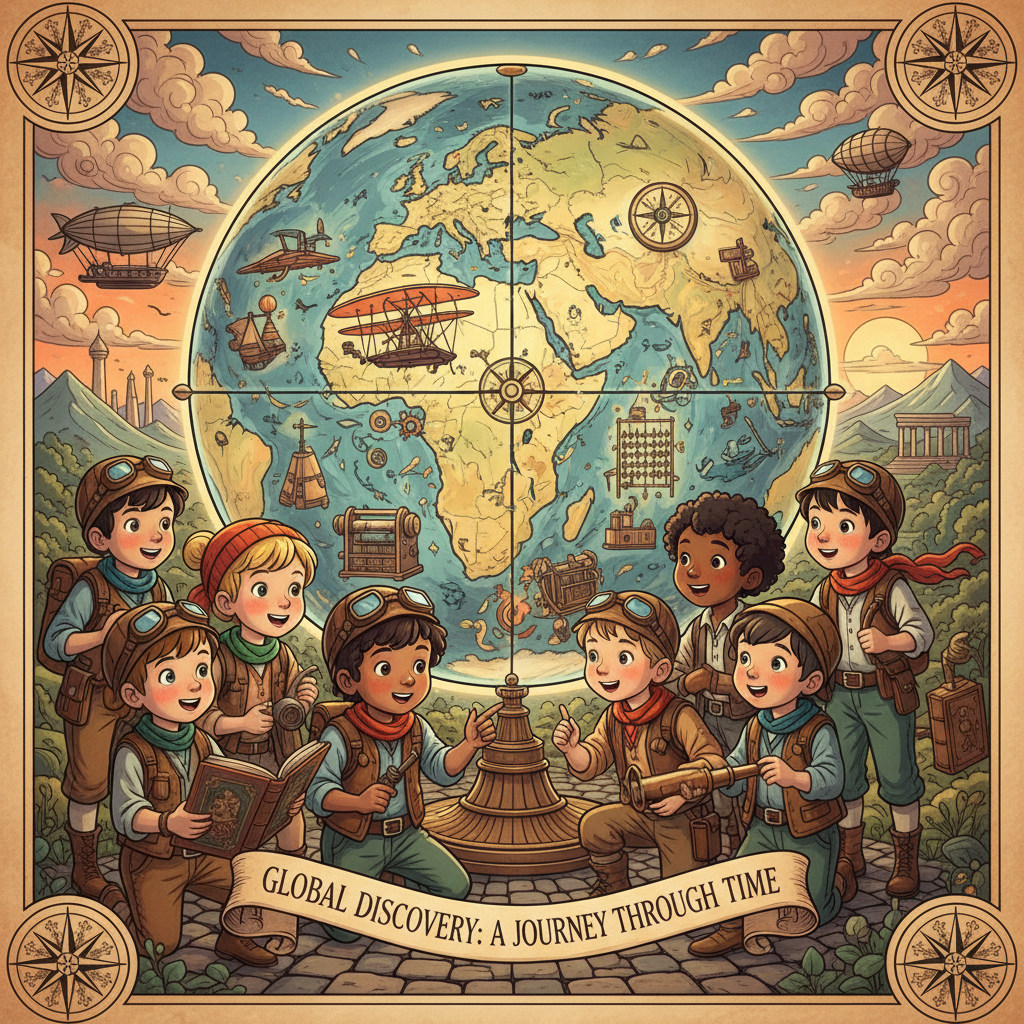
Igniting Curiosity: The Power of Global Invention
In an era where technology evolves at the speed of light, fostering a sense of curiosity in children has never been more vital. The team behind the globally acclaimed brand, known for uncovering the world’s most hidden wonders, has returned with a groundbreaking new project. For parents, educators, and young readers, The Atlas Obscura Explorer’s Guide to Inventing the World serves as a vibrant gateway into the mechanics of our civilization.
Following the massive success of the New York Times bestseller Atlas Obscura Explorer’s Guide for the World’s Most Adventurous Kid—which boasts over 200,000 copies in print—this new installment pivots from geographical locations to the incredible feats of human ingenuity. This isn’t just a history book; it is a globe-spanning journey that connects the dots between ancient ingenuity and modern breakthroughs.
Why STEM Education Needs a Global Perspective
STEM (Science, Technology, Engineering, and Mathematics) education is often criticized for being too abstract or focused solely on Western contributions. However, The Atlas Obscura Explorer’s Guide to Inventing the World challenges this narrative by presenting 50 of the planet’s most interesting inventions and scientific discoveries from a truly global perspective.
- Cultural Context: Understanding that invention doesn’t happen in a vacuum, but is a response to specific environmental and social needs.
- Historical Breadth: Moving beyond the Industrial Revolution to explore thousands of years of human creativity.
- Visual Learning: High-quality illustrations that break down complex mechanical concepts into digestible, engaging segments for middle-grade readers.
A Deep Dive into 50 World-Changing Inventions
The book is structured as an unforgettable trip across time and space. Instead of a chronological list, it functions like an atlas of the mind. Readers are whisked away to ancient Mesopotamia to understand the origins of the wheel, then suddenly find themselves in modern-day laboratories exploring the frontiers of biotechnology.
Highlights from the Journey
- The Origins of Communication: From the development of paper in China to the printing press in Germany, and how these tools democratized knowledge.
- Harnessing Nature: How early civilizations mastered wind and water power, paving the way for today’s green energy revolution.
- Medical Miracles: Exploring how simple observations led to the discovery of life-saving vaccines and antibiotics.
By engaging with The Atlas Obscura Explorer’s Guide to Inventing the World, children learn that they are part of a long lineage of problem-solvers. The book emphasizes that a great idea can come from anyone, anywhere, regardless of their background.
The Psychology of Exploration in Middle-Grade Readers
Middle-grade readers (typically ages 8–12) are at a critical developmental stage. Their cognitive abilities are expanding to allow for complex abstract thought, yet they still thrive on visual stimulation and storytelling. Research suggests that narrative-driven learning helps in long-term retention of scientific facts. By framing inventions as “discoveries” and “adventures,” Atlas Obscura taps into this psychological sweet spot.
The illustrations do more than just decorate the pages; they function as blueprints for the imagination. When a child sees a cross-section of an ancient irrigation system or the inner workings of an early computer, the “magic” of technology is replaced by the “logic” of engineering. This shift is essential for building a STEM-ready mindset.
Features that Make This Book Stand Out
Unlike standard textbooks, this guide includes unique features designed to keep wandering minds engaged:1. Global Mapping: Each invention is tied to a specific location on the globe, encouraging kids to learn geography alongside science.2. Interactive Challenges: Small prompts that encourage children to look at the objects in their own homes differently.3. Diverse Representation: A concerted effort to showcase inventors from all continents, highlighting voices that are often left out of traditional history books.
Building the Next Generation of Innovators
The ultimate goal of a book like this is not just to teach history, but to inspire the future. When kids read about the persistence of inventors who failed hundreds of times before succeeding, it builds emotional resilience. They learn that “failure” is simply a data point in the scientific method.
For teachers, this book is an excellent resource for the classroom. It can be used to bridge the gap between Social Studies and Science. A lesson on ancient Egypt, for example, can be revitalized by looking at the engineering of the pyramids or the chemistry of mummification through the lens of this guide.
Summary: Why This Is a Must-Have
In a world saturated with screens, giving a child a physical book that captures the wonder of the real world is a gift. The Atlas Obscura team has once again proven that the world is a vast, mysterious, and incredibly clever place. Whether you are looking for a birthday present, a classroom addition, or a way to bond with your child over the wonders of the universe, this book is an essential addition to any library.
By exploring the past through a STEM-oriented lens, we give our children the tools to build a better future. Let them start their journey today with a guide that is as adventurous as they are.
Created by MaximusContent.MacroTechTitan.com
Discover more from Unread Page
Subscribe to get the latest posts sent to your email.